8th Biennial RAMICS International Congress in Brazil
“Plurality of Social Currencies: solidarity economy, municipal and community currencies for inclusive and sustainable futures”
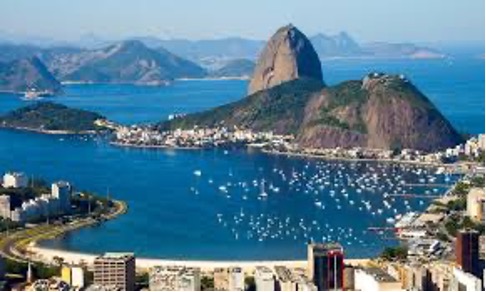
Rio de Janeiro, Brazil, June 8-12, 2026


>> Download the program here <<
Important dates:
| Activity | Date |
| Submitting abstracts | The abstract submission deadline has been extended to February 22. |
| Notification of acceptance | March 1st, 2026 (Sunday) *Proposals submitted before the deadline will be evaluated and communicated in advance. |
| Registration deadline | Early Bird: April 2nd, 2026 (Thursday) Late Registration: April 22nd, 2026 (Wednesday) |
| Submitting full papers | May 24th, 2026 (Sunday) |
| Conference | June 8-12th, 2026 |
Address: Rio de Janeiro (Brazil), FGV Headquarters Building (Praia de Botafogo, 186 – Botafogo, Rio de Janeiro – RJ)
Organization of the Congress:
- Centro de Estudos em Microfinanças e Inclusão Financeira (FGVcemif)
- Programa de Engenharia de Sistemas e Computação (PESC/COPPE/UFRJ)
- Instituto Federal do Rio de Janeiro (IFRJ)
- Universidade Federal da Bahia (UFBA)
- Universidade Federal Fluminense (UFF)
- Research Association on Monetary Innovation and Community and Complementary Currency Systems (RAMICS)
Title of the Conference:
- 8th Biennial RAMICS International Congress in Brazil. Plurality of Social Currencies: solidarity economy, municipal and community currencies for inclusive and sustainable futures
Conference Presentation
The Ramics research association focuses on studying monetary innovation and community and complementary currency systems. Since 2011, the network has met every two years to share experiences, ideas, and practices on complementary currencies.
The 8th congress will be held in Rio de Janeiro, Brazil, June 8-12, 2026.
In a global context marked by growing mistrust in governments and widening gaps between local and central institutions, complementary and community currencies have emerged as innovative tools to rebuild social and economic connections. Across the world, these initiatives foster solidarity, inclusion, and resilience by creating local exchange systems and sustainable models of development rooted in community participation. Numerous experiences have been developed in different regions, each with distinct characteristics, objectives, and institutional arrangements.
Beyond their economic function, these currencies serve as instruments of social innovation and democratic experimentation. They encourage collective governance, stimulate local entrepreneurship, and strengthen citizens’ capacity to act within and beyond traditional market logics. By doing so, they invite a rethinking of value, cooperation, and sustainability in contemporary economies, aligning financial practices with broader social and environmental goals.
The 8th Biennial RAMICS Conference, entitled “Plurality of Social Currencies: Solidarity Economy, Municipal and Community Currencies for Inclusive and Sustainable Futures,” seeks to deepen and enrich the debate on these initiatives. Through lectures by national and international experts, presentation of academic research and experience reports, and field trips, the event aims to foster interdisciplinary dialogue and exchange of experiences, contributing to the advancement of discussions on solidarity economy, local development, and financial inclusion.
Conference website (for paper submissions and additional details): https://ramics2026.sciencesconf.org/.
Organizing committee:
Prof. Anderson Oriente (IFRJ, Rio de Janeiro)
Prof. Ariádne Scalfoni Rigo (UFBA, Salvador)
Prof. Bruno Chapadeiro Ribeiro (UFF, Niterói)
Prof. Eduardo Diniz (FGV, São Paulo)
Prof. Lauro Gonzalez (FGV, São Paulo)
Prof. Luiz Arthur Silva de Faria (UFRJ, Rio de Janeiro)
Marcos Rodrigo Maciel Ferreira (UFRJ, Rio de Janeiro)
Prof. Paula Duarte (FGV, Rio de Janeiro)
Pedro Paulo Gonçalves neto (UFRJ, Rio de Janeiro)
Rogério de Castro Melo (FGV, São Paulo)
Themes for paper presentations are:
- Digitalization, and technologies
- Suggested key words: 4th industrial revolution, digital currencies, cryptocurrencies, blockchain, digital divide, governance, centralization, software licenses, digital sovereignty, digital financial inclusion etc.
- Territories, and participation
- Suggested key words: empowerment, decentralization, decommodification, (re-)distribution, social cohesion, social innovation, community resilience, local development, participation, regional, local, governance, civil society, community currencies, citizenship etc.
- Public policies, and relations with governments
- Suggested key words: federalism, basic income, debt crises, poverty, inequality, liquidity, inflation, ethical finance, social harmony, social justice, centralization, governance, institutional arrangements, legal framework, municipal currencies etc.
- Environment, and sustainability
- Suggested keywords: degrowth, perpetual pandemics, energy transition, natural resources, ecology, green new deal, green investment, climate change, biodiversity, energy poverty, agroecology etc.
- History and theories
- Suggested key words: monetary reform, history, transition phases, typologies, design, theoretical review, conceptual propositions etc.
- Emerging themes and other approaches (in case your work is not covered by the other themes).
More information will be published here and in the official website in due time, sign up to our newsletter to be the first to hear about it. For submission and registration check the official website.
Scientific Committee (in alphabetical order)
Prof. Anderson Oriente (IFRJ, Rio de Janeiro, Brazil)
Prof. Ariádne Scalfoni Rigo (UFBA, Salvador, Brazil)
Prof. Bruno Chapadeiro Ribeiro (UFF, Niterói, Brazil)
Prof. Eduardo Diniz (FGV, São Paulo, Brazil)
Prof. Ester Barinaga, University of Lund (Sweden)
Dr. Gabriella Gimigliano, University of Siena
Prof. Georgina Gomez, ISS, University of Rotterdam (Netherlands)
Dr. Jens Martignoni, Zurich University of Applied Sciences (Switzerland)
Prof. Jerome Blanc, Triangle, Sciences Po Lyon (France)
Prof. Lauro Gonzalez (FGV, São Paulo, Brazil)
Dr. Luca Giachi, CNR Issirfa (Italy)
Prof. Luiz Arthur Silva de Faria (UFRJ, Rio de Janeiro, Brazil)
Prof. Masayuki Yoshida, Joetsu University of Education (Japan)
Prof. Paula Duarte (FGV, Rio de Janeiro, Brazil)
Dr. Rossitsa Toncheva (University of National and World Economy, Bulgária)
Additional information:
On June 4, 5, and 6, 2026, there will also be an additional event organized by the Conference of the Brazilian Network of Community and Municipal Banks, to be held at the Casa de Rui Barbosa Foundation, in Botafogo, Rio de Janeiro.
The Conference of the Brazilian Network of Community and Municipal Banks aims primarily to strengthen the networks of popular and solidarity economy initiatives supported by community and municipal banks across the country. In addition, the event will serve as a space for organizing the movement’s agendas and advocacy priorities, as well as for electing the Network’s new board of directors.
The conference will bring together approximately 250 participants, including leaders from civil society organizations from more than 100 cities, researchers, national and international public officials, and other invited guests.
Further information will be available on the RAMICS 2026 website: https://ramics.cos.ufrj.br.
 RAMICS
You must be logged in to post a comment.